Start with the available electrodes.
FIG. 6 identifies eight active electrodes (604a-604h) and three reference electrodes (606a-606c). The electrode carrier (608) connects them with the controller (610).
Original p. 21 · [0068] ↗The original drawing, with the controller, carrier and electrode groups explained where they appear.
Read the PDF + source pages ↗Follow the source ↓
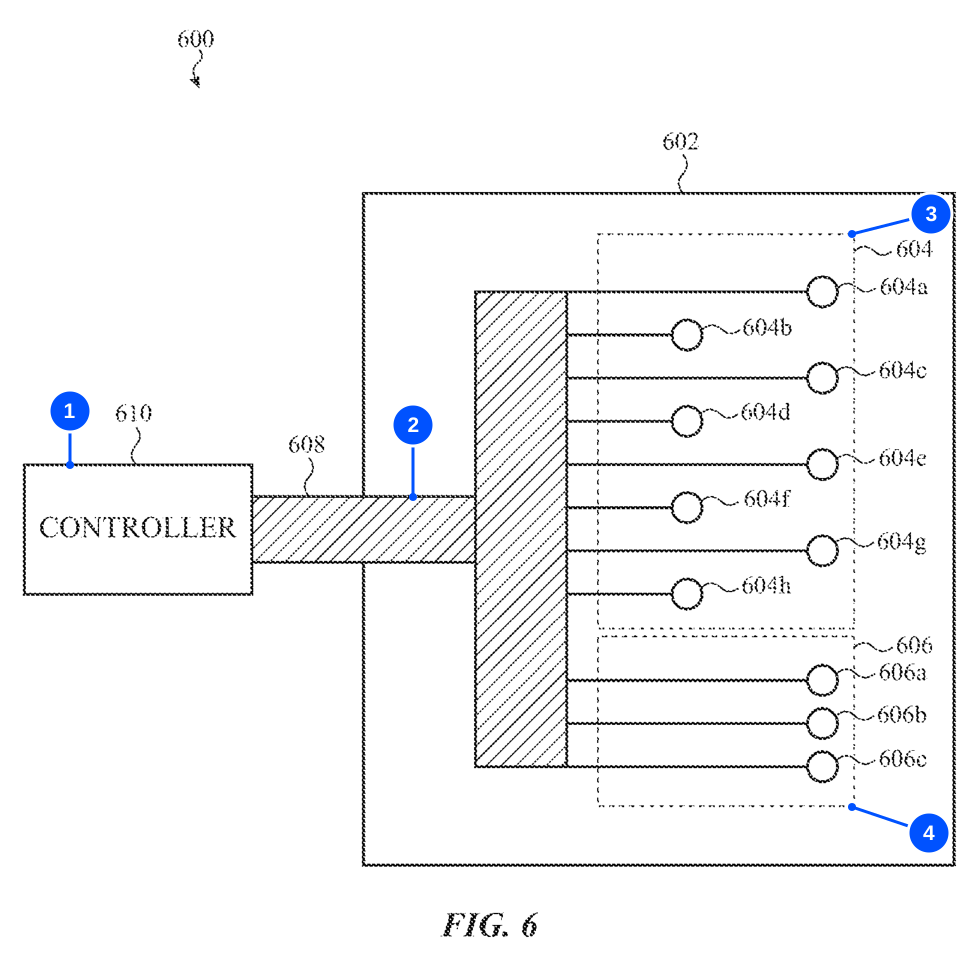
It may choose an active subset and a reference subset, then perform a measurement test using both. EEG is one example.
The hatched carrier holds the electrodes and may electrically couple them to the controller. The description names a flex or microaxial cables.
These eight contacts form the active group shown here. The controller may select one or more; the drawing does not identify a chosen subset.
A reference subset is also selected. The measurement uses the selected active and reference subsets together.
Our numbered annotations identify parts on the original FIG. 6. The drawing, its geometry and its reference numbers are preserved. The explanation follows paragraphs [0068]–[0069]; no particular electrode subset is shown as selected.
FIG. 6 identifies eight active electrodes (604a-604h) and three reference electrodes (606a-606c). The electrode carrier (608) connects them with the controller (610).
Original p. 21 · [0068] ↗The controller may choose one or more electrodes from each group. The description lists impedance, noise, distance between active and reference electrodes, and half-cell potentials as selection criteria.
Original p. 21 · [0069] ↗The controller may then perform a measurement test using both selected subsets. Paragraph [0069] names EEG measurement as one example.
Original p. 21 · [0069] ↗Selection is part of the design. The controller can choose which active and reference electrodes participate in a measurement, using the criteria set out in the description. The callouts identify those parts; paragraph [0069] explains the choice before measurement.
Original PDF page 21, paragraphs [0068]–[0069], describes the components, selection criteria and measurement test. Open a passage to compare the wording with the preserved page.
The active electrodes 604a-604h and the reference electrodes 606a-606c may be carried by an electrode carrier 608Open original page 21 ↗
The controller 610 may select one or more active electrodes 604a-604h to form a subset of active electrodesOpen original page 21 ↗
The controller 610 may then perform a measurement test using the selected subsets of active and reference electrodes. In one example, the measurement may be for measuring an EEG.Open original page 21 ↗
US20230225659A1 · Biosignal Sensing Device Using Dynamic Selection of Electrodes · Published July 20, 2023. This is an independent explanation of the published design. Figure and source record · Complete original PDF · 24 pages
Start with a publication and choose what you want explained. For a dedicated visual briefing, tell us which mechanism or figure matters; we’ll agree the scope and price with you.
Commission something like this →